
In the competitive and complex oil and gas industry, organizations face constant pressure to reduce costs, optimize efficiency, and enhance performance, as even small missteps can lead to significant financial and environmental impacts. Each sector—upstream, midstream, and downstream—faces unique challenges, but they generally revolve around three key areas: managing and analyzing vast amounts of data, ensuring safety and quick responses to critical incidents, and effectively managing human resources.
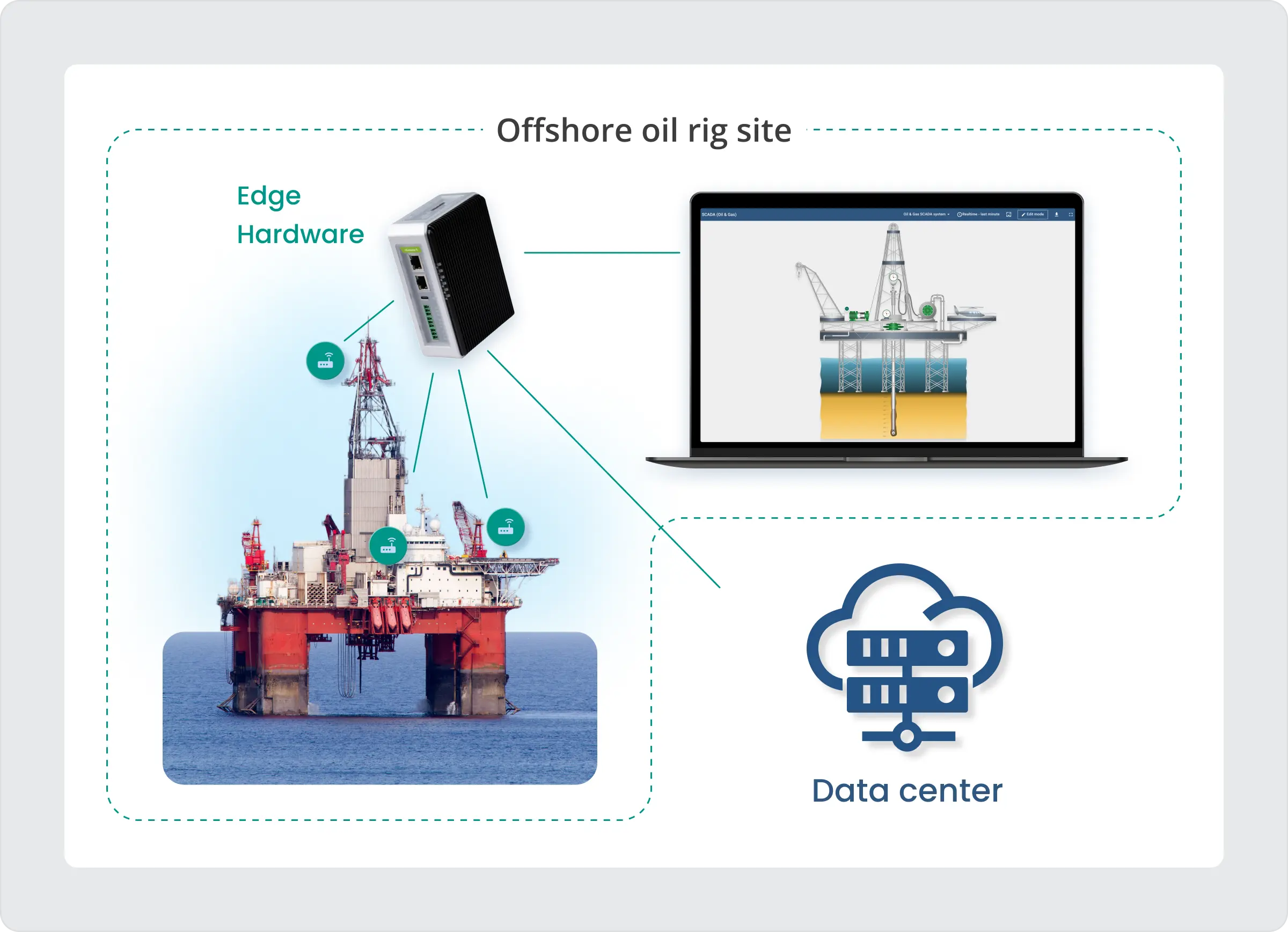
In many cases, implementing appropriate software and hardware solutions is key to addressing challenges in the industry. Technologies like Edge, IoT, AI, and automation can greatly enhance operational efficiency, safety, and decision-making across sectors. For instance, in the oil and gas industry, Edge systems can be deployed on an oil rig’s platform or on a nearby floating vessel. These systems are ideal for real-time, urgent tasks that require quick, delay-sensitive processing due to hardware limitations.
The Challenges Overview
Oil rigs, both offshore and onshore, face challenges that impact efficiency, safety, and environmental responsibility. Operating in extreme, isolated environments increases the risk of accidents and compromises structural integrity. Rigs require constant maintenance and monitoring, as downtime from equipment failure or inadequate upkeep leads to financial losses, delays, and safety risks. Additionally, the industry’s shortage of skilled personnel is exacerbated by the remote, hazardous nature of the work, making it difficult to attract and retain qualified workers.
The Solution: Maintaining Remote Monitoring with Thingsboard Edge and SCADA System
In a traditional drilling operation various data points such as pressure, temperature, and mud weight are recorded and analyzed manually. The integration of digital technologies such as IoT sensors, Edge computing, and SCADA systems represents a significant leap toward more efficient and accurate drilling processes. By automating the collection and analysis of key data points, these technologies help mitigate human error, reduce the need for manual intervention, and enable real-time decision-making as well as enhance personnel safety.
The Architectural Design of the ThingsBoard Edge
The unique architectural design behind the ThingsBoard Edge system enables exceptional performance and efficiency.
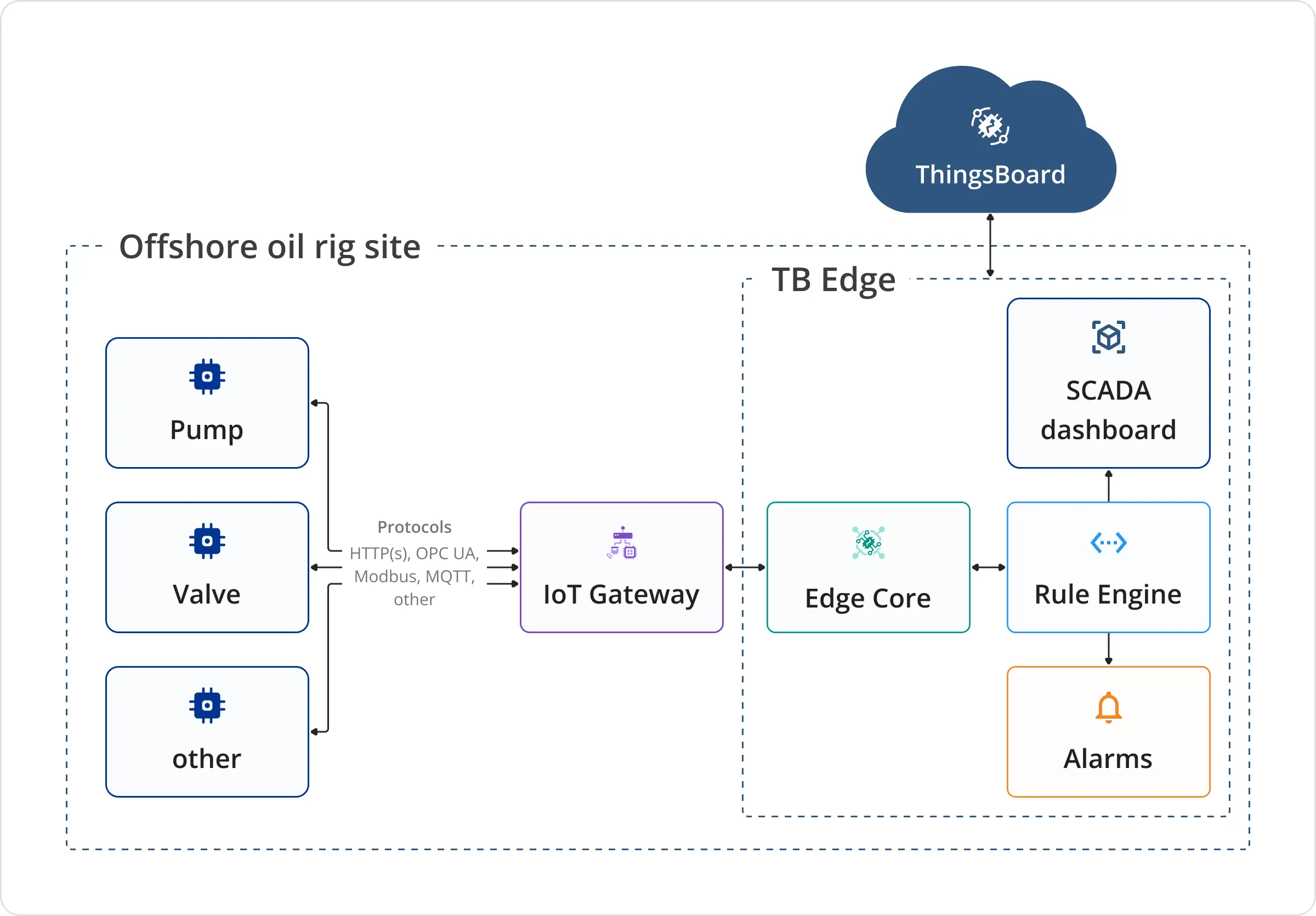
- The IoT devices and sensors continuously collect data for analysis, enabling real-time anomaly detection.
- The IoT Gateway integrates these devices and sensors, which may be connected to legacy and third-party systems, with the ThingsBoard Edge platform and can store data locally without relying on a cloud connection.
- The ThingsBoard Edge system is responsible for processing the incoming data. For clarity, we can highlight two main parts: the Edge Core to interact with the platform for tasks such as managing devices, telemetry data, and assets; and the Rule Engine, which facilitates custom event-based workflows.
- Then, the incoming data is visualized on the Dashboards with the numerous widgets.
Edge SCADA Dashboards
To further improve the operational efficiency, the ThingsBoard integrates support for SCADA-like HMI Dashboards.
The Edge SCADA Dashboards with their interactive capabilities are enabling remote access to equipment and real-time insights into its condition. A clear understanding of system performance enables operators to work with precision on both the data and equipment.
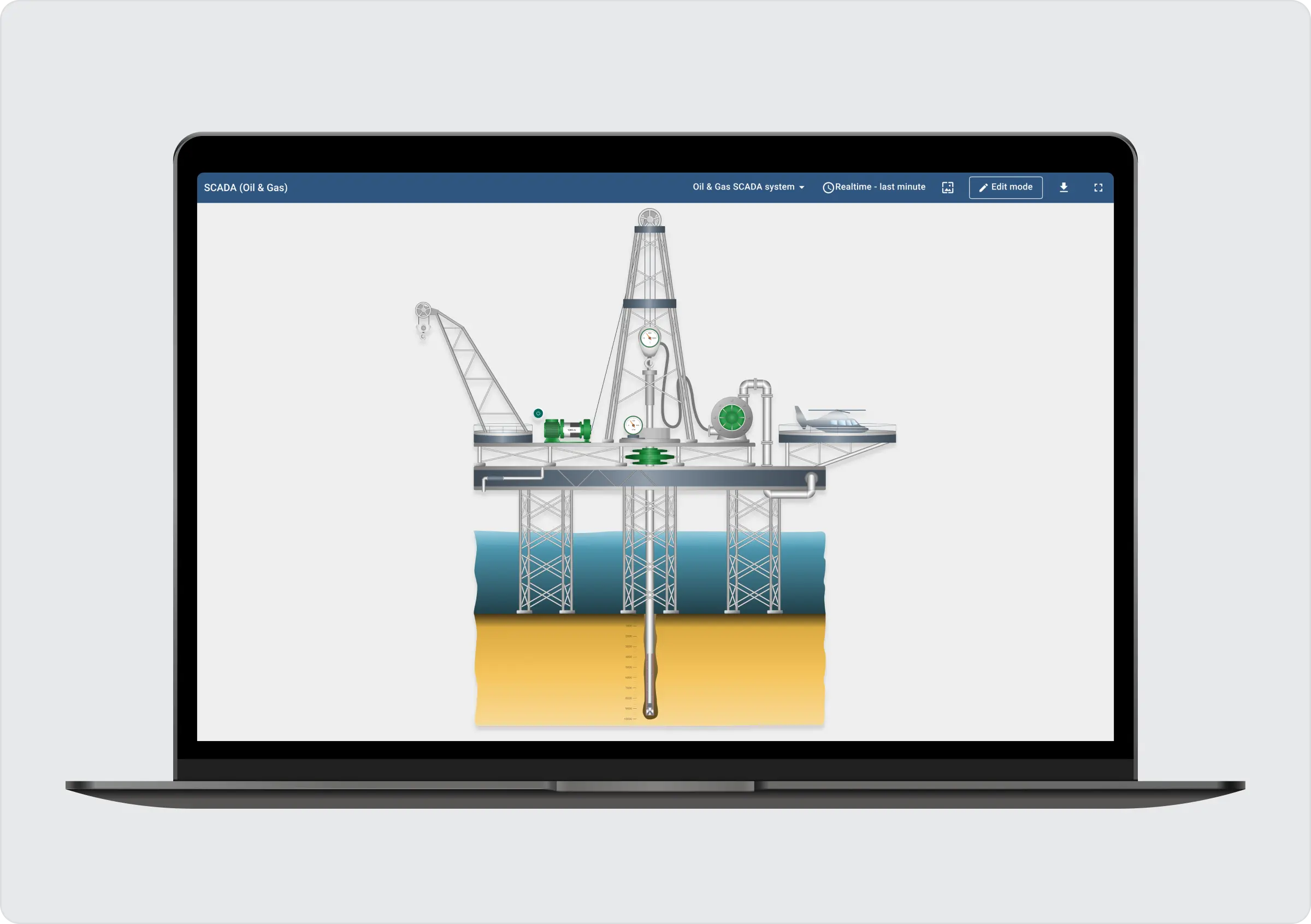
That can reduce the need for on-site personnel, lower labor expenses, improve overall cost efficiency and enhance safety.
In the event of an emergency, operators are able to assess the situation remotely and implement safety protocols by accessing the machinery through the Edge SCADA Dashboard in a timely manner, without putting workers at risk.
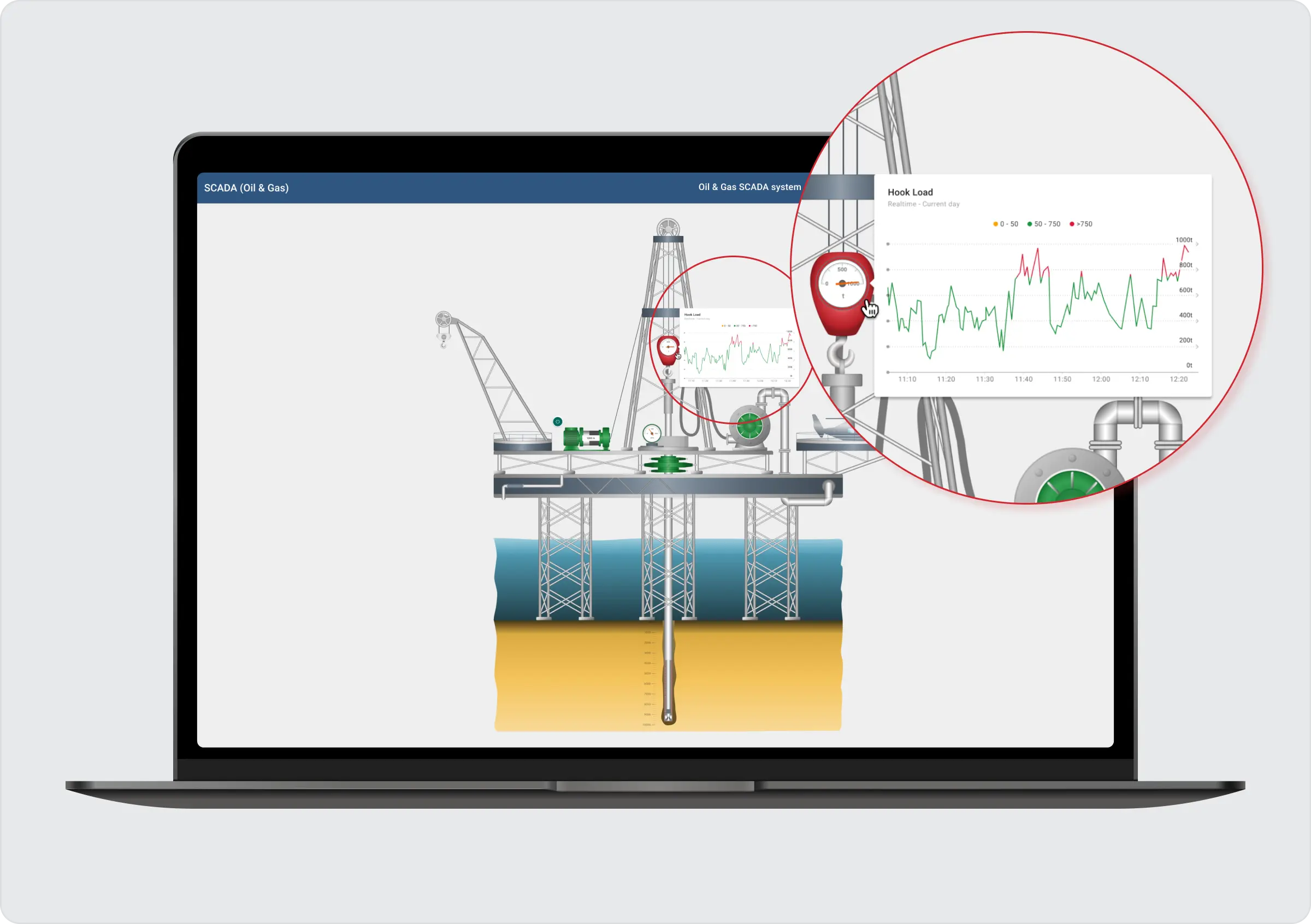
Let us consider a hypothetical scenario in which there is a rapid increase in hook load. In such an instance, the Edge system, which processes data locally, will promptly alert the operator, enabling a swift and appropriate response.
Predictive Maintenance
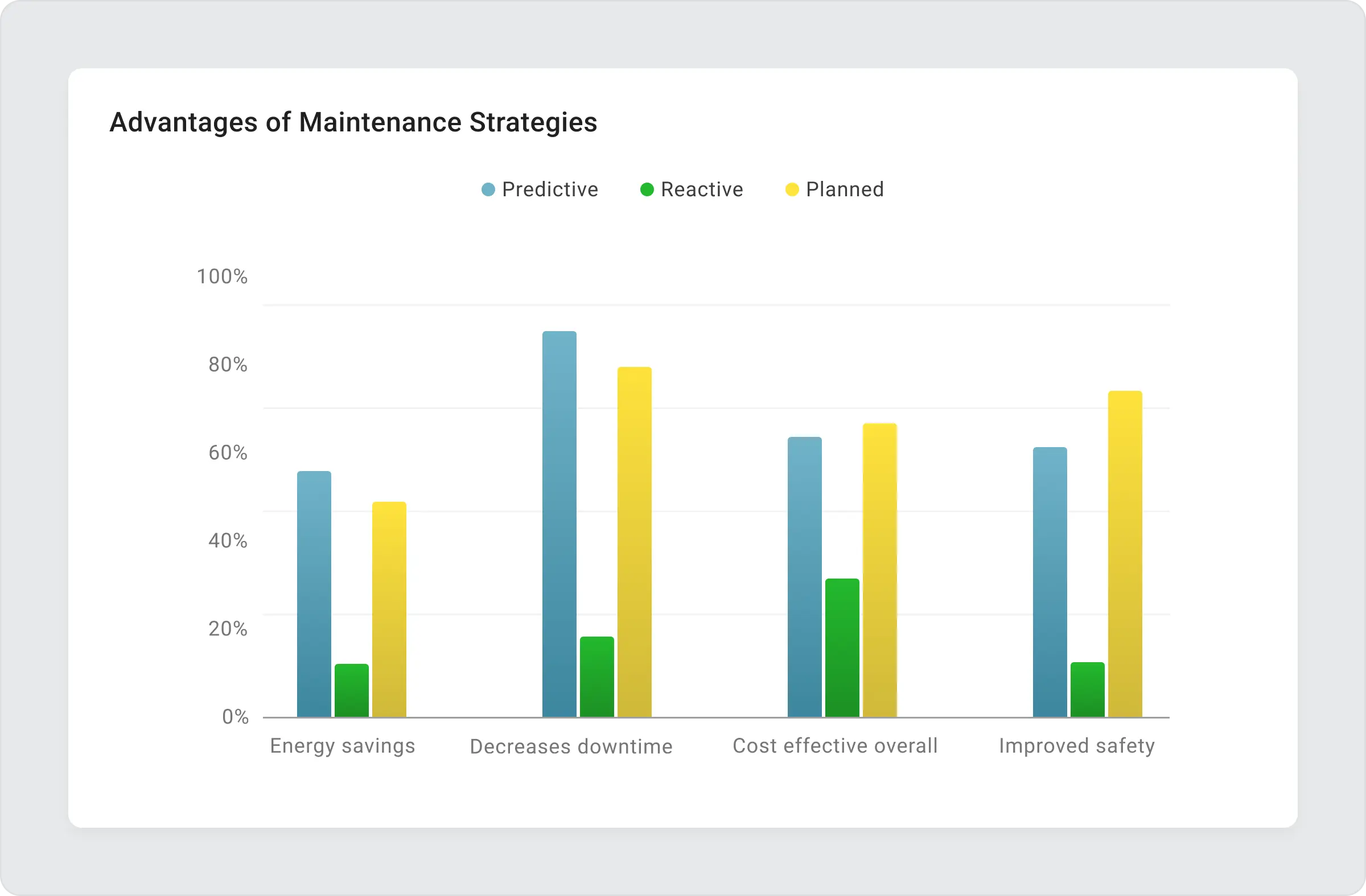
Moreover, the fact that various sensors permit 24-hour monitoring considerably reduces the likelihood of equipment failure. The continuous monitoring enables predictive maintenance, allowing operators to anticipate equipment failures before they occur and shift from reactive to proactive maintenance. This helps reduce unplanned downtime, which is costly, extend the life of critical equipment, and improve overall operational efficiency.
The bar chart illustrates the approximate success rates of various maintenance strategies.
The Conclusion
Innovative technologies like SCADA, Edge Computing, and Remote Asset Management are revolutionizing the oil and gas industry. They provide a powerful solution by offering local data processing and real-time monitoring capabilities. By utilizing IoT sensors for continuous data collection and leveraging Edge Rule Engines to automate workflows, companies can enhance their ability to respond to anomalies, perform predictive maintenance, and avoid costly downtime.
Through the deployment of Edge computing and SCADA dashboards, oil and gas operators can confidently face the challenges of today and tomorrow, driving innovation, enhancing performance, and positioning themselves for a future of sustainable growth.
Discover the power of ThingsBoard Edge and ThingsBoard IoT Gateway!